OpenAI Economic Research / 文章
受访科学家估计,同样质量的工作,没有AI要花1.9倍时间
OpenAI经济研究团队分析了1,819名科学家的580,186条科学消息,并调查了251人。98%的答卷者预期AI会加快发现,官方同时写明:生产力是自我报告,发现速度是预期,并不能证明因果关系。
乔木改写
受访科学家估计,同样质量的研究工作,如果没有AI,平均要花1.9倍时间。在回答发现速度问题的250人里,98%认为AI会加快自己领域的发现,22%认为原本要花10年的发现,有了AI可能在3年内发生。
这些数字来自OpenAI经济研究团队的问卷调查,是科学家自己的时间估计和对发现进度的预期。官方明确写,它们不能证明因果关系。
这份研究在2026年11月16日以《Science at the Frontier: How Scientists Use ChatGPT》为题发布。团队分析了学术研究者计划里1,819名科学家、在2026年8月20日至9月22日期间的580,186条科学消息,并向计划参与者做了调查。调查时间为9月30日至10月7日,分析里呈现了251人的答卷,具体人数会随题目变化。
为保护隐私,研究团队使用自动分类器,按研究活动类型给消息归类,例如阅读文献、写代码或分析数据。研究人员能看到这些类别,但没有阅读底层消息,也没有阅读ChatGPT的回复。该计划默认不用参与者数据来训练模型。
官方页面顶部有一个可旋转的科学物件球体,也有一段标为3分13秒的音频。本次没有取得可保存的静帧、音频地址或逐字稿,因此不把这两项未核验内容写进正文。页面上的图表没有取得可长期保存的图片地址,下面的数字按页面读到的数值整理成表格。
完整论文和一份要点文件可以在官方页面下载。完整论文的作者署名为Chris Liao、Carl Shan和Aaron Chatterji,文内日期是2026年11月6日。这里按11月16日的官方网页及其链接的要点文件来写,不把76页论文展开成另一篇文章。
平均每位科学家的科学消息里,阅读和写作合起来超过一半
研究先按每位科学家计算各类科学消息的占比,再对这些占比取平均,让每位科学家权重相同。百分比经过四舍五入。官方图表的纵轴从0%到30%。
| 活动 | 平均占比 |
|---|---|
| 阅读和学习 | 28% |
| 写作和交流 | 27% |
| 分析证据和理论 | 17% |
| 编写研究软件 | 14% |
| 发展想法 | 5% |
| 教学和指导 | 3% |
| 研究行政 | 3% |
| 审阅研究 | 2% |
| 收集数据 | 1% |
| 其他研究活动 | <1% |
阅读和学习是28%,写作和交流是27%,两项合起来已经超过一半。这一点和完整论文摘要里的说法一致:平均每位科学家的科学消息里,阅读和写作两项就占了一半以上。其他研究活动不足1%,官方说明这一栏合并了“其他”和“端到端自主研究”两类。
要点文件还写,理解陌生概念、起草论文、分析结果和编写研究代码这四项活动,合计占平均每位科学家消息的85%。
68%的科学家至少用ChatGPT做过研究构思
研究把“使用过构思功能”定义成:在研究期间至少发送过3条与发展研究想法有关的消息。按这个标准,68%的科学家用ChatGPT做过研究构思。
专门看这些构思消息时,官方按每名科学家的占比再取平均,角色分布是:
| 角色 | 占比 | 官方说明 |
|---|---|---|
| 由科学家主导 | 35% | 科学家带来一个具体问题,让ChatGPT处理 |
| 共同发展 | 36% | 科学家带来一个想法,请ChatGPT加以改进 |
| 由ChatGPT建议 | 23% | 科学家请ChatGPT建议一个研究问题 |
| 其他 | 6% | 无法归入前面几类 |
23%这一栏是科学家请ChatGPT提出研究问题,和前两栏里由科学家先给出问题或想法不同。
要点文件补充了一句分工上的观察:在头脑风暴时,科学家常常把ChatGPT当作想法来源;在形成具体研究问题时,则更常由科学家提供最初的想法,再让ChatGPT帮助改进。
编码的时间估计接近3倍,但经费和人手仍是常见限制
生产力问题问的是:要完成同样的工作、并保持同样的质量,如果没有AI,需要多少时间。八类研究活动等权平均,每类有249到251人作答。他们估计,有AI可用时花1小时的工作,没有AI大约要花1.9小时。如果某位科学家报告自己在某一类活动中没有使用AI,这一类的时间按没有变化计入。
官方要点文件写,研究编码一项,科学家估计没有AI几乎要花三倍时间;研究构思一项,则接近两倍。这仍是自我报告,不是对照实验。
科学家还提到,即便有了能干的AI工具,限制依然存在。要点文件给出的选项结果是:最常被提到的是时间或人手不足,占51.8%;经费不足占43.8%;71%的科学家至少选了这两项中的一项。网页正文把这些限制概括为人员配置、经费和实验能力,没有在网页正文里重复这两个一位小数的百分比。
大约每三条科学请求里,就有一条随后被追问、核对或修改
官方把“请求导致后续追问”称为科学家参与分数。它统计的是:在同一段对话里,科学家是否在7天内用下一条科学消息,要求澄清、核对或修改。每个活动类别先算每位科学家自己的比例,再取平均。只有观察窗口完整、结果可判定的初始请求才计入。
| 活动 | 追问比例 |
|---|---|
| 写作和交流 | 38% |
| 编写研究软件 | 34% |
| 分析证据和理论 | 34% |
| 审阅研究 | 32% |
| 发展想法 | 31% |
| 阅读和学习 | 29% |
| 研究行政 | 27% |
| 教学和指导 | 27% |
| 收集数据 | 26% |
写作和交流最高,是38%。编写研究软件、分析证据和理论都是34%。也就是说,即便在编码这类AI能力经常被讨论的任务上,平均仍有约三分之一的请求会被科学家继续追问。要点文件把总体水平写成:科学家发出科学请求后,平均大约每三条消息里,就有一次在一周内要求进一步解释、核对或修改。
不同学科对“十年发现能提前多少”的判断并不一样
发现速度问题请250名科学家设想:自己领域里一项没有AI需要10年才能完成的发现,有了AI会在多久后发生。“无加速”包括10年或更长。每人可以选择多个领域,因此各领域分组会重叠。百分比四舍五入后,加总不一定等于100%。
| 领域 | 3年内 | 4到7年 | 8到9年 | 接近10年 | 无加速 | 人数 |
|---|---|---|---|---|---|---|
| 全部领域 | 22% | 50% | 19% | 6% | 2% | 250 |
| 数学与统计 | 31% | 41% | 16% | 10% | 1% | 87 |
| 计算 | 28% | 45% | 20% | 5% | 2% | 60 |
| 生命与健康科学 | 20% | 44% | 29% | 0% | 7% | 59 |
| 物理科学 | 17% | 55% | 18% | 5% | 5% | 83 |
| 交叉及其他 | 13% | 48% | 25% | 12% | 3% | 40 |
| 工程 | 10% | 59% | 25% | 6% | 0% | 51 |
全部领域里,一半人选择4到7年,22%选择3年内,只有2%认为不会加快。数学与统计里,31%选择3年内,是各领域里最高的;工程里这一比例是10%,同时有59%选择4到7年。生命与健康科学是唯一出现7%“无加速”的分组,也是“接近10年”为0%的分组之一。这些是分领域的预期分布,不能直接理解成各学科已经被测量到的加速幅度。
在预期会加快发现的科学家里,研究请他们用自己的话解释原因,并在224份书面回答里识别出367条理由,一条回答可以包含多个理由。百分比是按这367条理由计算的:把研究做得更快占52%,找到更有前景的研究问题占23%,追求更广的问题范围占14%,其他占11%。
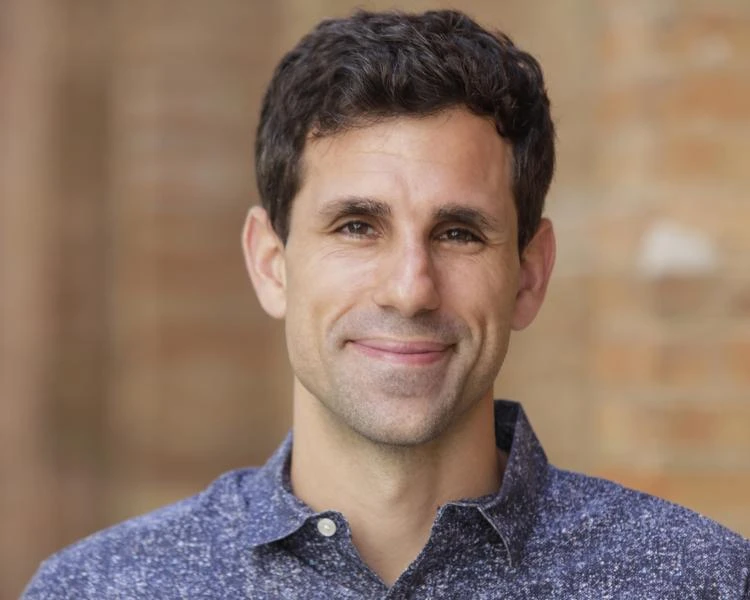
页面默认可见的一句引语来自César de la Fuente。他说:像ChatGPT这样的工具,正在帮助我们加快科学发现,对他这样的科学家来说,这真的是一个可以玩耍的场地。页面把这句引语标在抗菌研究之下。轮播里还有Beatriz Yankelevich、Catherine Brownstein、Alan Beggs和Chi-kwan Chan,这四人的引语本次没有逐条核验,因此不收录他们的肖像,以免错配。
媒体未能载入,请通过下方原文链接查看。
官方把这些预期写成还需要更多研究,才能判断它们会不会变成更快的发现。发现进度也取决于科学家检验想法时所需要的经费、人员和实验能力。
同日宣布的扩招:11月23日起先到先得发放5万份新资助
研究页面写,他们同时在扩大ChatGPT学术研究者计划,为全球超过20万名研究者提供免费访问。更具体的名额、档位和申请规则,写在同日发布的另一篇公告《Broadening access to AI for scientists》里。下面这些细节来自那篇公告,不是研究正文里的调查结果。
计划的试点从7月开始。下一轮申请在11月23日星期一开放,将向符合条件的研究者发放5万份新资助,规则改为先到先得。每份资助覆盖申请人本人,以及最多两名合作者,提供的是ChatGPT Plus。已经在候补名单上并且符合条件的人,官方会在申请开放前发邮件,说明如何激活账户。
参与者可以使用OpenAI的前沿模型,并获得如何把ChatGPT用于研究的培训。该计划默认不用通过计划共享的数据来训练模型。
试点以来,已有33个国家的2万名研究者加入。试点期间提供的是ChatGPT Pro。官方复核使用量后认为,大多数参与者本来也会落在Plus的用量限额内,因此新一轮改发Plus,以便把名额覆盖到更多研究团队。按每份资助覆盖最多3人计算,这一轮最多可以支持15万人。整个计划的目标是20万人,是7月试点启动时宣布目标的两倍。选拔方式也从抽签改为:在符合资格的申请里,按提交顺序录取前5万份。
公告举了两个使用例子。布莱根妇女医院(Brigham and Women's Hospital)和哈佛医学院的研究者Shuqi Li,在寻找可能缩短结核病疗程的新药靶点,并在探索ChatGPT能否帮助把实验室数据和患者数据连起来,以加快抗生素开发。佛罗里达自然历史博物馆的AI生物多样性助理策展人Arthur Porto和团队,用AI工具把博物馆标本照片做成可检索的数据库,还做了一个转动时翅膀会变色的蝴蝶三维模型,外观接近真实标本。
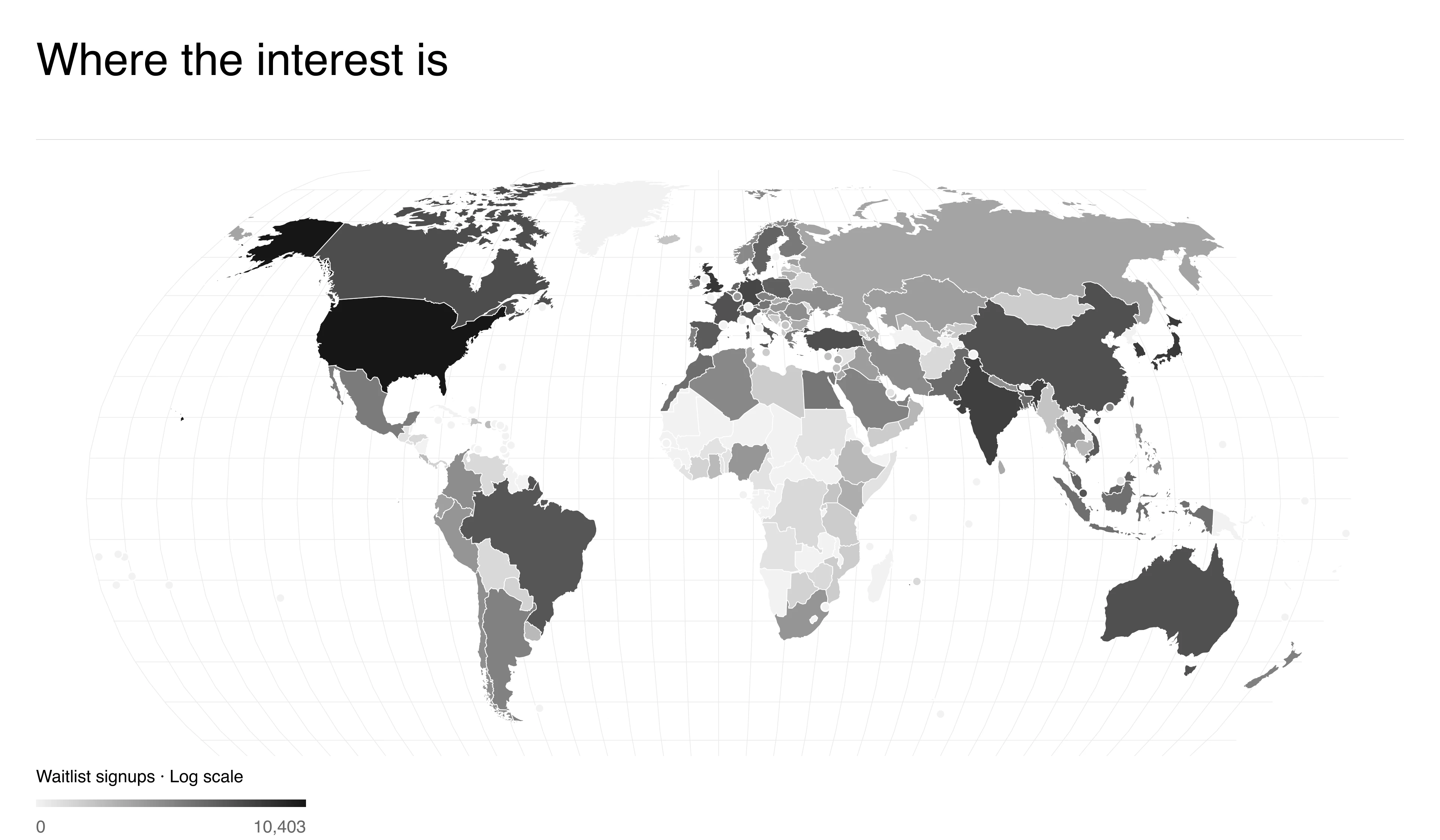
扩招公告配了一张标题为Where the interest is的世界地图,展示截至2026年11月12日、按估计所属机构国家或地区统计的候补名单登记量。颜色越深表示登记越多,图例是对数刻度,两端是0和10,403。官方替代文本写,登记量最多的是美国。地图本身没有标出国家名称。
媒体未能载入,请通过下方原文链接查看。
公告还提到其他入口。数学方面,OpenAI向一个新的西蒙斯基金会项目提供了500万美元,帮助数学家检查、理解并继续推进由AI产生的结果。大学还可以通过ChatGPT Edu为校园提供研究、教学和学习用的访问。生物学方向的GPT-Rosalind,把专门的生物学推理与科学工具和数据库访问放在一起;Rosalind学术计划面向美国大学中符合条件的实验室,最多提供30个席位,最长12个月免费,但须通过可信访问审批。
如果要核对原始数据和限制条件,可以直接读完整论文和要点文件。符合条件并想申请下一轮名额的研究者,可以看扩招公告里的开放时间和资格说明。阅读这些结果时,需要同时记住官方自己写下的限度:使用情况描述的是向AI发出的请求,生产力是自我报告,发现速度是预期,研究并不建立因果关系。
原文
Science at the Frontier: How scientists use ChatGPT
媒体未能载入,请通过下方原文链接查看。
媒体未能载入,请通过下方原文链接查看。
Science at the frontier
How more than 1,800 scientists used ChatGPT—and what they expect AI to mean for scientific discovery. Explore the findings in our new report.
November 16, 2026
Scientific progress depends on researchers asking new questions and finding ways to answer them. AI is becoming part of that work, but we’re still learning where it helps and what it could mean for discovery.
OpenAI’s Economic Research team studied more than 580,000 scientific messages from 1,819 scientists in the ChatGPT for Academic Researchers summer pilot and surveyed 251 participants.
Scientists used ChatGPT across the research process, from reviewing literature to analyzing evidence and developing ideas. Surveyed participants estimated that the same work, at the same quality, would have taken 1.9 times as long without AI. And 98% of those who answered our question about discovery timelines expected AI to accelerate discovery in their field.
By default, OpenAI does not use participants’ data from the ChatGPT for Academic Researchers program to train its models. To protect researchers’ privacy, we used tools called automated classifiers to sort messages by the type of research activity, such as reviewing literature, writing code, or analyzing data. The research team could see those categories, but did not read the underlying messages or ChatGPT’s responses.
The official page includes an interactive rotating sphere of scientific objects at the top, with the instruction: “Drag left or right, or use the arrow keys, to rotate the sphere of scientific objects. Press Space to pause or resume.” A durable still image was not available, so that artwork is not reproduced here. The page also has an audio player marked 3:13; a durable audio URL and transcript were not obtained, so the audio is not reproduced here. The charts below are transcribed from the official page into tables, because durable image URLs for the charts were not available.
AI is part of scientists’ daily work
We studied how scientists used ChatGPT across the research process.
Average share of scientific messages:
| Activity | Average share |
|---|---|
| Reading and learning | 28% |
| Writing and communicating | 27% |
| Analyzing evidence and theories | 17% |
| Writing research software | 14% |
| Developing ideas | 5% |
| Teaching and mentoring | 3% |
| Research administration | 3% |
| Reviewing research | 2% |
| Gathering data | 1% |
| Other research activities | <1% |
For each scientist, we calculated the share of their scientific messages in each activity, then averaged those shares, giving every scientist equal weight. Percentages are rounded; other research activities accounted for less than 1%. The y-axis on the official chart runs from 0% to 30%.
68% of scientists used ChatGPT to develop research ideas
We looked at how scientists used ChatGPT for ideation. The figures below describe their messages about research ideas.
| Role | Share | Official description |
|---|---|---|
| Led by scientist | 35% | of the time, scientists brought a specific question for ChatGPT to work with. |
| Developed together | 36% | of the time, scientists brought an idea and asked ChatGPT to refine it. |
| Suggested by ChatGPT | 23% | of the time, scientists asked ChatGPT to suggest a research question. |
| Other | 6% | The message could not be categorized into one of the other activities. |
98% of surveyed scientists expect AI to speed up discovery in their field.
We asked scientists across different fields to imagine a discovery that would take 10 years without AI and estimate how long it would take with AI.
Responses by scientific field:
| Field | Within 3 years | 4–7 years | 8–9 years | Just under 10 years | No acceleration | n |
|---|---|---|---|---|---|---|
| All fields | 22% | 50% | 19% | 6% | 2% | 250 |
| Math & statistics | 31% | 41% | 16% | 10% | 1% | 87 |
| Computing | 28% | 45% | 20% | 5% | 2% | 60 |
| Life & health sciences | 20% | 44% | 29% | 0% | 7% | 59 |
| Physical sciences | 17% | 55% | 18% | 5% | 5% | 83 |
| Interdisciplinary and other | 13% | 48% | 25% | 12% | 3% | 40 |
| Engineering | 10% | 59% | 25% | 6% | 0% | 51 |
250 respondents answered this question. Respondents could select multiple fields, so field groups overlap. Percentages are rounded and may not total 100%. “No acceleration” includes answers of ten years or longer.
Scientists stay involved even after delegating tasks to ChatGPT
We measured how often scientists followed up to clarify, check, or revise ChatGPT’s responses across different research activities.
Average percentage of each scientist’s requests that led to a follow-up:
| Activity | Follow-up rate |
|---|---|
| Writing and communicating | 38% |
| Writing research software | 34% |
| Analyzing evidence and theories | 34% |
| Reviewing research | 32% |
| Developing ideas | 31% |
| Reading and learning | 29% |
| Research administration | 27% |
| Teaching and mentoring | 27% |
| Gathering data | 26% |
How could AI further scientific progress?
We asked scientists who expected faster discovery to explain why. Three reasons stood out in their answers.
| Reason | Share |
|---|---|
| Get research done faster | 52% |
| Find more promising research questions | 23% |
| Pursue a wider range of questions | 14% |
| Other | 11% |
Scientists could give multiple reasons. Percentages show the share of all 367 reasons identified in 224 written responses.
Looking ahead
Scientists in this study used ChatGPT to explore ideas, analyze evidence, write code, and communicate their findings. Their responses also point to ambitions beyond saving time: finding more promising questions and pursuing a wider range of research.
Understanding whether those expectations translate into faster discovery will take more research. Progress will also depend on the funding, staff, and experimental capacity scientists need to test their ideas.
We want to empower more scientists to explore what AI can make possible in their work. Alongside this research, we’re expanding ChatGPT for Academic Researchers, with free access for more than 200,000 researchers around the world. Helping scientists turn their ideas into discoveries that improve lives is central to our mission of ensuring that AGI benefits all of humanity.
For more on this study, read the complete paper or download the key findings.
“Tools like ChatGPT are helping us accelerate scientific discovery. It’s really a playground for a scientist like myself.”
César de la Fuente
The official page shows this quote next to a portrait of César de la Fuente, labeled “Antimicrobial research,” in a carousel that also includes Beatriz Yankelevich, Catherine Brownstein, Alan Beggs, and Chi-kwan Chan. Only the default visible quote was verified; the other four quotes were not captured, so those portraits are not reproduced here.
Who we studied
We analyzed 580,186 scientific messages from 1,819 scientists on the ChatGPT for Academic Researchers plan from August 20 to September 22, 2026.
The survey ran from September 30 to October 7, with 251 scientists’ responses presented in our analysis. The number of answers varies by question.
How we measured AI use
For each scientist, we calculated the share of their scientific messages in each activity, then averaged those shares, giving every scientist equal weight. “Other research activities” combines the other and end-to-end autonomous research categories.
Ideation adoption means sending at least three messages about developing research ideas during the study. The idea-role chart averages each scientist’s shares of ideation messages. “Other” means the role could not be determined.
The “requests led to a follow-up” is the scientist involvement score. It measures requests for clarification, checking, or revision in the next scientific message in the same conversation within seven days. We average each scientist’s rate within each activity. Only initial requests with a complete observation window and an assessable outcome are included.
How to read the survey results
Productivity. We asked scientists how much time they would have needed without AI to complete the same work at the same quality. Across eight research activities, they estimated that one hour of work with AI available would have taken about 1.9 hours without it. Each activity counted equally in that average and included 249–251 respondents. When a scientist reported using no AI for an activity, we counted the time as unchanged.
Discovery timelines. We asked 250 scientists to imagine a discovery in their field that would take ten years without AI. How soon did they expect it to happen with AI? The chart groups their answers by the timeline they expected. “No acceleration” includes answers of ten years or longer. Scientists could select more than one field, so some appear in more than one group.
Why scientists expected faster discovery. Scientists who expected AI to speed up discovery could explain why in their own words. We identified 367 reasons in 224 written answers. A single answer could give several reasons. The percentages show how common each reason was among the 367.
Sources, privacy, and limitations
The research team worked with outputs from privacy-preserving classifiers and did not inspect underlying ChatGPT messages or responses. Training is off by default on the ChatGPT for Academic Researchers plan.
Usage describes requests made to AI. Productivity is self-reported, and discovery results are expectations. These findings do not establish causal effects. Scientists also reported constraints on staffing, funding, and experimental capacity.
Percentages are rounded to the nearest whole percent, with values below 1% shown as “<1%.” Rounded categories may not total 100%.
Companion announcement on the same day: Broadening access to AI for scientists
The study page links to a same-day official announcement, Broadening access to AI for scientists. The following text is from that announcement, not from the study itself.
We’re expanding the ChatGPT for Academic Researchers program to give up to 200,000 researchers worldwide free access to ChatGPT.
The program began as a pilot in July. Applications for the next round open Monday, November 23. We’ll award 50,000 new grants to eligible researchers on a first-come, first-served basis. Each grant gives the recipient and up to two collaborators free access to ChatGPT Plus. If you’re already on the waitlist and qualify, we’ll email you before applications open with instructions for activating your account.
Participants can use OpenAI’s frontier models and get training on how to use ChatGPT in their research. By default, we don’t use data shared through the program to train our models.
Waitlist signups by country or territory as of November 12, 2026. Darker colors indicate more signups on a logarithmic scale.
The official map is titled “Where the interest is.” Its alt text reads: “World map of ChatGPT for Academic Researchers waitlist signups by estimated institutional country, as of November 12, 2026. Darker shading indicates more signups on a logarithmic scale from 0 to 10,403; the United States has the largest count.” The visible legend is “Waitlist signups · Log scale,” with endpoints 0 and 10,403.
What we learned from the pilot
20,000 researchers in 33 countries have joined the program since the pilot began in July. Shuqi Li, a researcher at Brigham and Women’s Hospital and Harvard Medical School, looks for new drug targets that could ultimately shorten tuberculosis treatment. He is exploring whether ChatGPT can help link lab and patient data to speed up antibiotic development. Arthur Porto, assistant curator of AI biodiversity at the Florida Museum of Natural History, and his team uses AI tools to turn photographs of museum specimens into searchable databases. They also created a 3D model of a butterfly whose wings change color as you turn it, just like the real specimen.
We’re also publishing Science at the Frontier: How Scientists Use ChatGPT, new research from our Economic Research team examining how more than 1,800 researchers used ChatGPT during the program’s summer pilot. Surveyed participants estimated that, without AI, the same research work at the same quality would have taken nearly twice as long.
Building on what we learned
The program’s summer pilot helped us understand how researchers use ChatGPT and how we can improve their experience. Based on feedback from researchers, we’re moving away from lottery-based selection. For the next round, we’ll provide access to the first 50,000 applications who meet the eligibility requirements.
The pilot gave researchers access to ChatGPT Pro. When we reviewed pilot usage, we found that most participants would have stayed within ChatGPT Plus usage limits. Based on that finding, we’re offering Plus for new grants so we can extend access to more research teams.
Each grant for this round covers the recipient and up to two collaborators, supporting up to 150,000 researchers. Our goal for the program as a whole is to reach 200,000 researchers, double the goal we announced when the pilot launched in July.
Supporting researchers across fields
In mathematics, we contributed $5 million to a new Simons Foundation initiative to help mathematicians examine, understand, and build on results produced by AI.
- Through ChatGPT Edu, universities can give their campus communities access to ChatGPT for research, teaching, and learning, with tools for analyzing data and administrative controls for managing access.
- For researchers working in biology, GPT‑Rosalind brings together specialized biological reasoning and access to scientific tools and databases. The Rosalind Academic Plan helps bring these capabilities to eligible labs at U.S. universities, offering up to 30 seats at no cost for up to 12 months. Access to GPT‑Rosalind requires approval through our trusted-access process.
Visit the researcher access guide to learn more about ChatGPT Edu, GPT‑Rosalind, and ChatGPT for Academic Researchers.